How to Set Up a Quarantine Tank for New Aquarium Fish
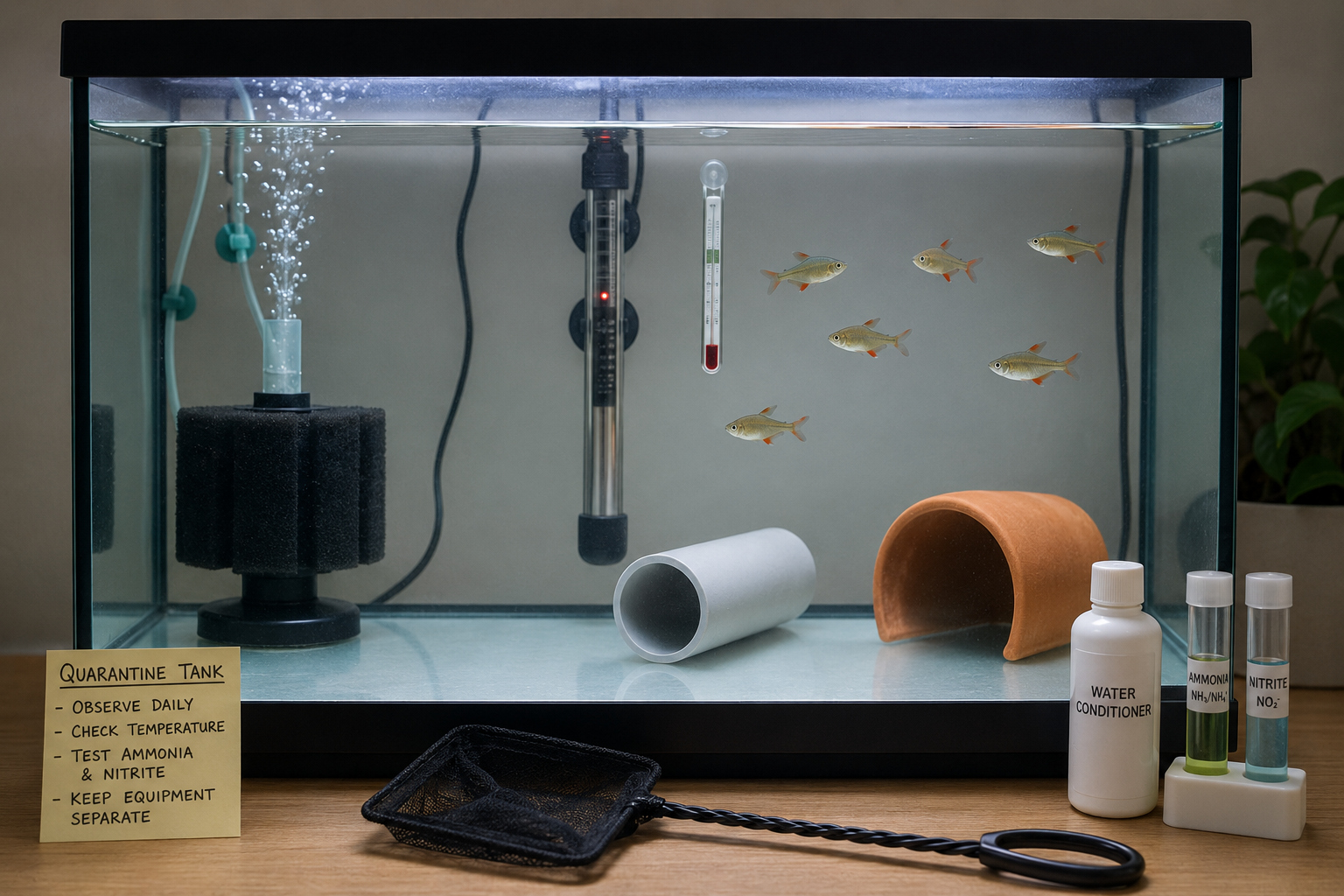
A quarantine tank gives newly acquired fish a safe place to recover from transport, begin feeding normally and be observed before they are introduced to an established aquarium.
Bringing home new aquarium fish is exciting, and it can be tempting to add them directly to the main tank. Unfortunately, a fish that looks perfectly healthy at the store may still be carrying parasites or disease without showing obvious symptoms.
A quarantine tank gives new fish a separate, controlled environment where they can recover from transport, begin feeding normally, and be observed before they are introduced to an established aquarium. It also greatly reduces the risk of introducing disease to fish that are already healthy.
The good news is that a quarantine aquarium does not need to be complicated or expensive. In many cases, a simple setup is actually easier to maintain and makes observing the fish much easier.
Why Should You Quarantine New Aquarium Fish?
The main purpose of quarantine is to reduce the chance of introducing parasites, infectious diseases or other health problems into an established aquarium.
Transport and a sudden change of environment can be stressful for fish. A fish may appear healthy when purchased but begin showing signs of illness several days later. Keeping new arrivals separately gives you time to observe them before they come into contact with the rest of your stock.
Quarantine also makes everyday observation easier. You can quickly check whether a new fish is eating, swimming normally, breathing comfortably and holding its fins normally. Subtle changes are often much harder to notice in a large, decorated community aquarium.
For students who keep aquariums while dealing with a busy college schedule, planning routine aquarium maintenance in advance can make the hobby much easier to manage alongside coursework. During particularly demanding periods, some students also use external writing services for help with research planning, editing, or written assignments. Whatever the schedule, however, newly acquired fish still need regular observation during quarantine.
What Do You Need for a Quarantine Tank?
A quarantine tank should be functional rather than decorative. Its purpose is to provide stable water conditions while allowing the aquarist to monitor the fish closely and keep the aquarium easy to clean.
A basic setup normally includes:
- A suitably sized aquarium with a secure lid
- A heater if required by the species
- A thermometer
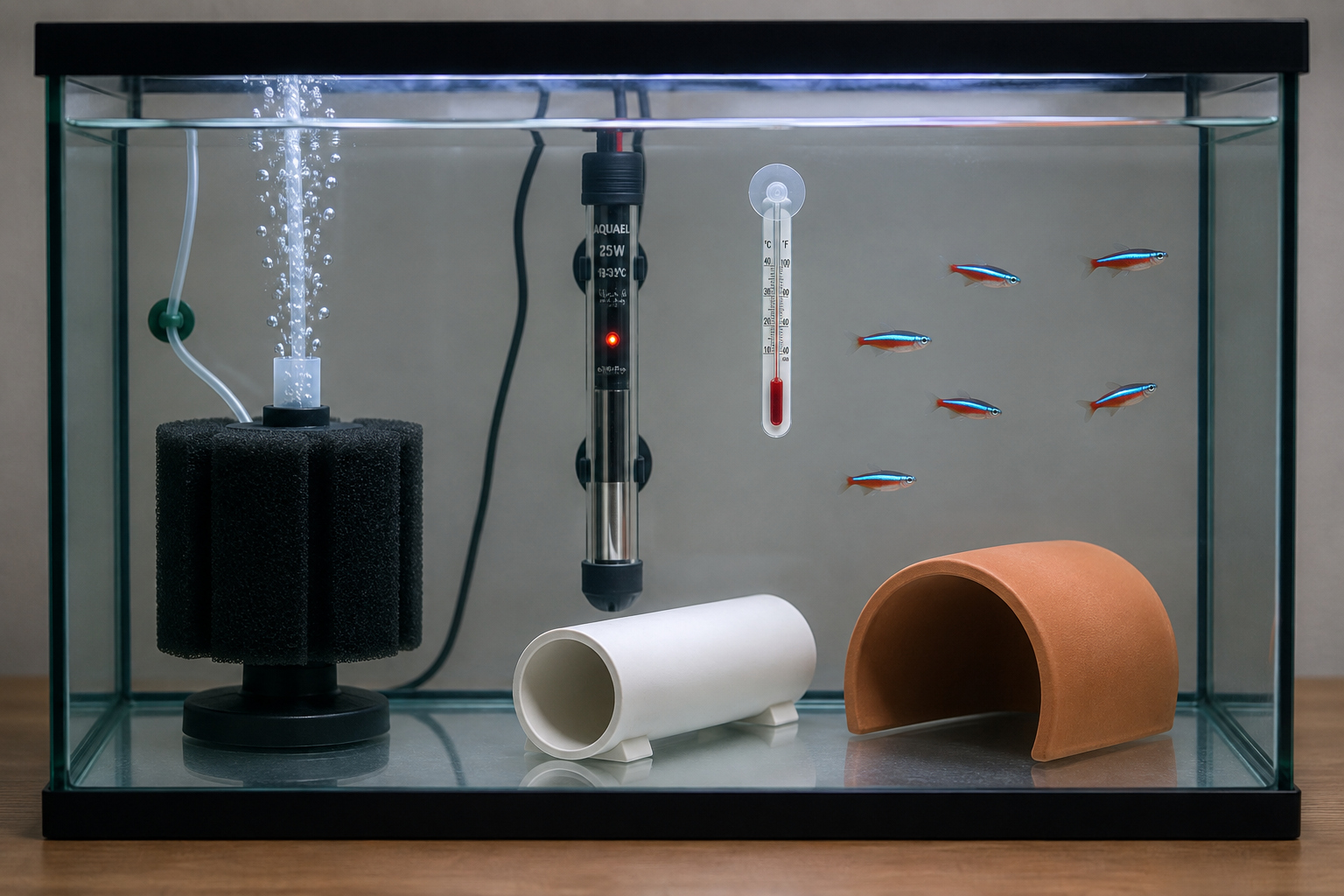
- A simple biological filter
- An air stone or additional aeration where necessary
- Simple, washable hiding places
- A separate net and siphon
- Water conditioner
- Tests for ammonia, nitrite, nitrate and other relevant water parameters
Tank size should always be chosen according to the fish being quarantined. A small group of tetras has very different requirements from a large goldfish or cichlid. Even a temporary aquarium must provide enough room for the fish to move normally without unnecessary stress.
Why a Bare-Bottom Tank Is Useful
Bare-bottom quarantine tanks are popular because uneaten food and waste remain visible and can be removed easily. Gravel, soil and complex decorations can trap debris and make cleaning more difficult.
This does not mean that the aquarium must be completely empty. Many fish feel safer when they have somewhere to hide. Simple PVC pipe sections, ceramic pots or other washable shelters can provide security without making the aquarium difficult to maintain.
Use a Mature Filter Whenever Possible
A quarantine tank still needs biological filtration. Fish continuously produce waste, and toxic ammonia can accumulate rapidly in a newly established aquarium. Beneficial bacteria in a mature biological filter convert ammonia and nitrite as part of the aquarium nitrogen cycle.
One practical solution is to keep an additional sponge filter running in an established healthy aquarium. When a quarantine tank is needed, the mature sponge filter can be transferred and used immediately.
Even with a mature filter, water quality should still be monitored regularly. The biological capacity of a small quarantine system can be limited, especially when several fish are introduced at the same time.
| Quarantine item | Why it matters | Simple tip |
|---|---|---|
| Filter | Helps control ammonia and fish waste | Use a mature sponge filter whenever possible |
| Heater | Keeps tropical fish at a stable temperature | Set the temperature according to the species |
| Thermometer | Helps identify unexpected temperature changes | Check it every day |
| Hiding place | Can reduce stress in newly transported fish | Use simple objects that are easy to disinfect |
| Separate net | Reduces the risk of transferring pathogens | Label it “quarantine only” |
| Water test kit | Helps monitor water quality | Check ammonia and nitrite regularly |
Keep Quarantine Equipment Separate
Using the same net, siphon or bucket in both the quarantine tank and the main aquarium can defeat much of the purpose of quarantine. Water and wet equipment can transfer parasites and other disease-causing organisms between tanks.
At minimum, keep a separate net and siphon for quarantine use. Ideally, buckets, cleaning tools and other wet equipment should also remain separate. Clearly labeling quarantine equipment is an easy way to avoid mistakes.
Match the Water to the Fish
Prepare the quarantine aquarium before the fish arrive. Temperature, pH, hardness and salinity should be appropriate for the species being quarantined. Do not assume that all tropical freshwater fish require identical conditions.
New fish should also be acclimated appropriately before entering the quarantine aquarium, particularly when the temperature or water chemistry differs from the transport water.
Whenever practical, avoid pouring water from the transport bag or store aquarium into the quarantine tank. After suitable acclimation, transfer the fish carefully while leaving as much transport water behind as possible.
For a more detailed explanation of acclimation methods, see our guide to acclimatizing aquarium fish .
Observe the Fish Every Day
Observation is one of the most important parts of quarantine. Check new fish carefully every day, ideally during feeding and again at another time.
Warning signs can include:
- White spots, unusual patches or changes in coloration
- Rapid or labored breathing
- Rubbing or flashing against objects
- Clamped, torn or damaged fins
- Abnormal swelling
- Unusual swimming behaviour
- Remaining near the surface or bottom for prolonged periods
- Loss of appetite
- Unexplained hiding, lethargy or weakness
A single unusual action does not necessarily mean that a fish is ill. Newly transported fish may behave differently while adjusting to their surroundings. Patterns and persistent changes are more important than one isolated behaviour.
Keep Simple Records
Keeping a basic quarantine log can be surprisingly useful. Record feeding, appetite, behaviour, temperature and important water-test results. If something begins to change gradually, written records make the pattern much easier to recognise.
Records are especially helpful when several fish are being quarantined or when the quarantine period lasts for many weeks.
How Long Should New Fish Stay in Quarantine?
Some diseases take time to become visible after transport, which is why a fish that appears healthy during the first few days should not automatically be moved into the main aquarium.
Certain fish, particularly marine species or valuable specimens with specific disease risks, may require a longer or more specialized quarantine procedure. The appropriate approach should always take the species and its likely health risks into account.
A Simple Quarantine Tank Can Prevent Major Problems
A quarantine aquarium does not need elaborate decoration or expensive equipment. A suitable tank, mature biological filter, stable water conditions, separate equipment and at least 30 days of careful observation can prevent many problems before they ever reach the main aquarium.
Quarantine also benefits the new fish themselves. Instead of immediately competing with established tank mates, they have time to recover from transport, begin feeding normally and adjust to their new environment.
Considering how much time and effort can go into maintaining a healthy aquarium, a simple quarantine tank is one of the most useful forms of prevention available to a fishkeeper.
References and Further Reading
- University of Florida IFAS Extension: guidance on fish health, quarantine and aquarium biosecurity
- Merck Veterinary Manual: management and quarantine of aquarium fish
- Aqua-Fish.Net: aquarium fish acclimatization guide