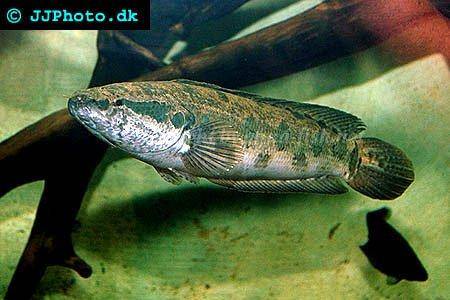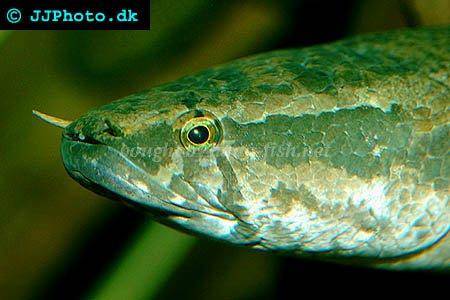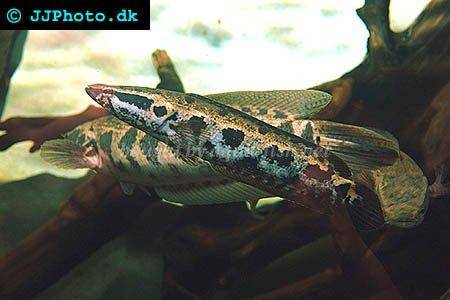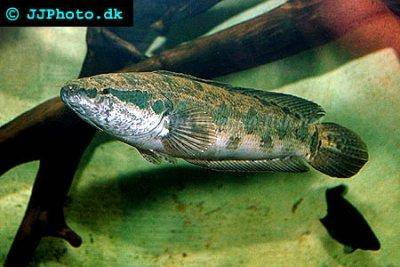
African snakehead - Parachanna obscura
Scientific name: Parachanna obscura
Common name: African snakehead
Family: Channidae
Usual size in fish tanks: 20 - 35 cm (7.87 - 13.78 inch)
014
Recommended pH range: 6.5 - 7.5
Recommended water hardness: 4 - 12°N (71.43 - 214.29ppm)
0°C 32°F30°C 86°F
Recommended temperature range: 25 - 28 °C (77 - 82.4°F)
The way how these fish reproduce: Spawning
Where the species comes from: Africa
Temperament to its own species: aggressive/territorial
Temperament toward other fish species: aggressive/territorial
Usual place in the tank: Middle levels
Food and Feeding
Parachanna obscura is a carnivorous predatory species that feeds on fish, insects, and crustaceans in the wild. In the aquarium, they should be offered a varied diet of meaty foods. Suitable foods include fish fillets, shrimp, mussels, earthworms, insects, and frozen carnivorous fish foods.
Although juveniles may prefer live food initially, they should be trained to accept frozen or prepared foods. Feeding live feeder fish regularly is not recommended due to the risk of parasites and poor nutritional value. Feeding two to three times per week is sufficient for adult specimens.
Origin
Parachanna obscura originates from West and Central Africa, including the Nile system, Lake Chad basin, and river systems across Nigeria and surrounding regions. They inhabit slow-moving rivers, swamps, and heavily vegetated waters with low oxygen levels.
Tank Setup and General Care
This species requires a spacious aquarium with plenty of hiding places. Use driftwood, plants, and caves to create a natural environment. A tightly fitted lid is essential, as snakeheads are capable of escaping. They are also able to breathe atmospheric air and must have access to the surface.
Moderate filtration is recommended, but strong currents should be avoided. Dim lighting and dense planting help reduce stress. Soft to neutral water conditions are preferred.
Temperament and Compatibility
Parachanna obscura is a predatory and territorial species. It should not be kept with small fish, as they will be eaten. Keeping multiple individuals together is risky unless a compatible pair forms. Even then, aggression may occur.
This species is best kept alone or with similarly sized robust fish in very large aquariums. Careful observation is required when housing with tank mates.
Sexing
Sexing Parachanna obscura is difficult. Females may appear slightly fuller when carrying eggs, but there are no reliable external differences between males and females.
Breeding
Parachanna obscura is a substrate-spawning species that forms pairs. The parents guard the eggs and fry aggressively. Spawning typically occurs in secluded areas among plants or decorations. Both parents participate in protecting the young.
Breeding in aquariums is uncommon but possible under suitable conditions with a bonded pair. The fry can be fed small live foods such as newly hatched brine shrimp.
Lifespan
With proper care, Parachanna obscura can live around 8 to 10 years. Large aquariums, stable water conditions, and a varied carnivorous diet contribute to their longevity.
Short Description
Parachanna obscura is an African snakehead species known for its predatory behavior and ability to breathe atmospheric air. This species requires a secure aquarium with hiding places and should not be kept with small fish. Best suited for experienced aquarists keeping large predatory species.
Pictures
Bought by aqua-fish.net from jjphoto.dk.