Fish Memory and Intelligence: What Research Actually Shows
The old joke that fish forget everything after a few seconds does not survive contact with modern behavioural research. Different fish species can retain memories for weeks or months, navigate complex environments, recognize visual patterns and individuals, solve physical problems and learn from other fish.
Fish cognition is far more varied than the stereotype of the “three-second memory” suggests. That stereotype is especially associated with goldfish, yet even classic laboratory work demonstrated retention in goldfish after far longer intervals, and newer studies show that goldfish can learn spatial rules such as estimating a travelled distance.
The strongest conclusion is not that every fish species is equally capable at every task. Fish have evolved under very different ecological pressures, so a cleaner wrasse, archerfish, cichlid, goby or goldfish may excel at different kinds of learning. Cognition is best understood by asking what information a particular species needs to survive and reproduce.
Fish cognition is now studied through carefully controlled behavioural experiments, long-term field observations and comparative research. As the volume of published work continues to grow, students reviewing this literature may encounter various forms of commercial academic support, including essay writers at DoMyEssay, yet the most interesting conclusions continue to come directly from the experiments themselves.
The Three-Second Fish Memory Myth Does Not Hold Up
There is no scientific basis for treating three seconds as a normal memory limit for fish. Learning experiments require animals to retain associations long enough to perform trained tasks, and many fish species retain information for days, weeks or considerably longer.
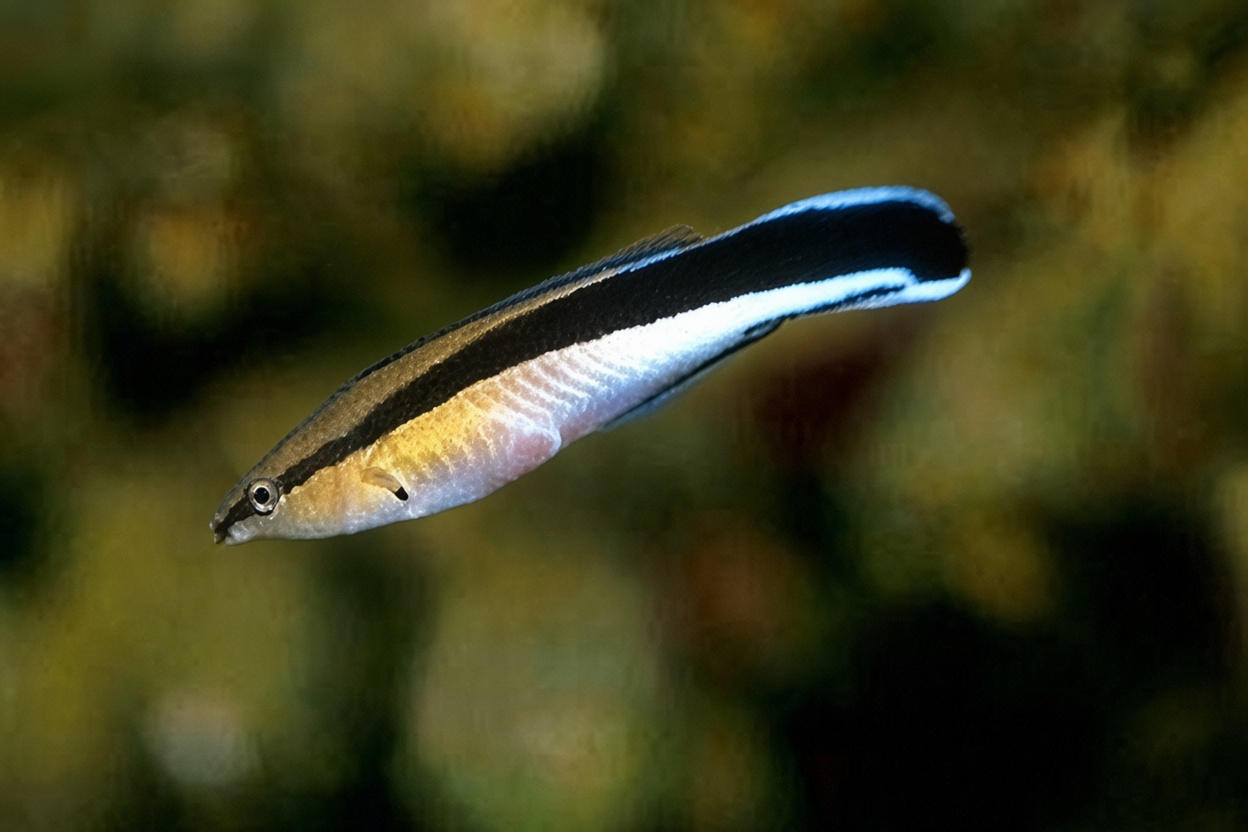
One striking field study involved the bluestreak cleaner wrasse (Labroides dimidiatus). Fish from an isolated reef had previously been captured with a barrier net for laboratory experiments and then returned to the reef. Eleven months later, about half of the cleaner wrasses at that site showed an unusual hiding response when the same type of barrier net was introduced, while fish at control sites did not show the same response.
The authors described the result carefully as correlative evidence of long-term memory after a highly aversive event. It was not an experiment on goldfish and it did not show that every individual remembered the event. Even with those limitations, retaining relevant information for up to eleven months is about as far from a three-second memory as one can get.
Goldfish Can Learn Spatial Rules
Goldfish themselves are useful subjects for cognition research. In a 2022 study, researchers trained nine goldfish to swim approximately 70 cm before turning around to receive a food reward. During testing, the external turning cue was removed and the fish still reproduced approximately the learned distance.
When the visual pattern around the tank was altered, their distance estimates changed in predictable ways. This showed that the fish were using visual motion information — optic flow — as part of their estimate of how far they had travelled.
That study was about spatial cognition rather than months-long memory retention, but it illustrates why the familiar picture of a goldfish as an animal incapable of retaining useful information is misleading.
What Different Fish Cognition Studies Have Demonstrated
| Species | Research task | Observed ability | What not to overclaim |
|---|---|---|---|
| Cleaner wrasse | Response to a barrier net after 11 months | Long-term retention of information associated with an aversive event | The study provided correlative evidence and did not test goldfish |
| Archerfish | Choosing a trained human face among unfamiliar faces | Complex visual discrimination without a mammalian neocortex | The study does not mean fish recognize people exactly as humans do |
| Graphic tuskfish | Breaking shellfish on rocks and coral heads | Repeated use of environmental objects as anvils | Tool use does not by itself prove human-like planning |
| African cichlid | Watching pairwise fights between unfamiliar males | Inference of social rank from observation alone | The task demonstrates a specific form of inference, not general “IQ” |
| Cichlids and stingrays | Blue and yellow cues for plus one or minus one | Learning and transferring simple numerical rules | The animals were not performing unrestricted arithmetic |
Fish Navigate Using More Than Simple Reflexes
Navigation is a major cognitive challenge underwater. Fish may have to remember shelters, feeding areas, territories, migration routes and safe pathways through environments that change with currents and tides.
Tide-pool gobies are a classic example. Some gobies can learn the spatial arrangement of neighbouring pools while submerged and later use that knowledge when jumping between pools at low tide. A mistake may leave a fish stranded on exposed rock, so remembering the local layout has direct survival value.
Migratory fishes provide another example of specialized navigation. Salmonids can use geomagnetic information during large-scale movement and olfactory information becomes especially important when locating natal waterways. These systems are complementary rather than a simple switch from one “compass” to another.
Tool Use: Tuskfish Turn Rocks Into Anvils
Tool use was once treated as an ability found mainly in a small number of birds and mammals, but some fish also manipulate objects or use features of the environment to solve feeding problems.
The graphic tuskfish (Choerodon graphicus) has been filmed carrying hard-shelled prey to rocks or coral heads and striking it repeatedly against these “anvils” until the shell opens. In one published observation, a fish made as many as 28 strikes during a single tool-use event.
Calling this tool use is reasonable because the fish deliberately brings prey to an external object and uses that object to obtain food. What the behaviour does not tell us on its own is exactly how much forward planning or conscious reasoning is involved.
Archerfish Can Distinguish Human Faces
Archerfish are famous for shooting jets of water at prey above the surface, which makes them unusually convenient subjects for visual-choice experiments.
In a 2016 study, archerfish were trained to spit at a particular human face displayed on a screen. The fish then had to choose that trained face from unfamiliar faces. In the more demanding second experiment, mean accuracy reached approximately 86.25%.
The result is interesting because fish do not possess a mammalian neocortex, the brain structure often associated with complex visual recognition in humans. It suggests that sophisticated visual discrimination can evolve using very different neural architecture.
Fish Can Learn Social Relationships by Watching Others
Social information can save an animal the cost of learning everything through direct conflict. Male Astatotilapia burtoni, a territorial African cichlid, were able to watch a series of contests between unfamiliar males and later infer an implied dominance hierarchy.
This is an example of transitive inference: if A dominates B and B dominates C, an observer can use those known relationships to infer something about A and C without having watched them fight each other.
The experiment does not mean that fish perform abstract logic in exactly the same way people do. It does show that observational learning can provide enough information for a fish to make useful decisions about social rank.
Some Reef Fish Coordinate With Other Species
Cognition is also visible in cooperative hunting. Groupers and coral trout have been observed hunting with partners such as giant moray eels, Napoleon wrasses and octopuses. The hunters complement one another: a fast fish can chase prey in open water, while a moray or octopus can reach into narrow reef crevices.
Researchers have documented a conspicuous head-down or “headstand” signal directed at the location of hidden prey. In coral trout, nearby octopuses were significantly more likely to approach when this signal was performed. The authors argued that the behaviour meets commonly used criteria for a referential gesture.
This does not require us to imagine a human conversation underwater. It does show that fish can adjust signals to a cooperative partner and direct that partner's attention toward a useful location.
The Cleaner-Wrasse Mirror Test Is Fascinating — and Controversial
Cleaner wrasses have also produced some of the most debated results in comparative cognition. In modified mirror-mark experiments, fish inspected themselves in a mirror and attempted to scrape away a coloured mark placed where it could only be seen in the reflection.
Follow-up work strengthened the behavioural case: mirror-experienced cleaner wrasses scraped ecologically relevant brown marks when a mirror was present, while other controls produced different responses.
The interpretation remains important. Passing a mirror-mark protocol has traditionally been discussed as evidence related to self-recognition, but researchers themselves have questioned whether the result means cleaner wrasses possess human-like self-awareness or whether the traditional mirror test is too narrowly interpreted.
Cichlids and Stingrays Learned “Plus One” and “Minus One” Rules
A 2022 study tested numerical learning in cichlids and freshwater stingrays using coloured geometric symbols. Blue signalled that the correct choice contained one more object; yellow signalled one fewer.
Six cichlids and four stingrays completed the training successfully. Transfer tests were designed to determine whether the animals had merely memorized familiar cards or had learned the general rule. Their choices supported the interpretation that they had learned to add or subtract one within the tested number range.
| Cue | Learned rule | Tested number space | Important limitation |
|---|---|---|---|
| Blue symbols | Choose one item more | 1 to 5 | This was a trained symbolic rule, not unrestricted mathematics |
| Yellow symbols | Choose one item fewer | 1 to 5 | Performance varied between individuals |
Fish Are Not a Silent Group of Animals
Sound production has evolved repeatedly among fishes. Species use grunts, knocks, hums, pulses and other signals in contexts such as courtship, territory defence and aggression. The exact mechanisms vary: some fish vibrate the swim bladder using specialized muscles, while others produce sounds through skeletal or fin structures.
The plainfin midshipman (Porichthys notatus) is a particularly well-studied example. Nesting males can produce long advertisement hums that attract females, while grunts and growls occur during aggressive interactions. Recent field research has even shown that motorboat noise can change the rate and acoustic characteristics of these vocalizations.
The broader lesson is not that all fish “talk” in the same way. It is that acoustic communication is a genuine and biologically important part of life for many species.
Evidence for Pain Has Changed Fish-Welfare Research
Fish welfare is sometimes discussed as though fish only produce automatic reflexes to harmful stimulation. Modern research is more complicated than that.
Teleost fishes possess nociceptors that detect potentially damaging stimuli. Noxious stimulation can alter normal behaviour, feeding, ventilation and activity, and some of these responses are reduced by analgesic treatment. Reviews of this evidence conclude that fish clearly possess nociception and provide substantial evidence consistent with pain perception.
Science cannot directly measure another animal's subjective experience in the way a person can describe pain verbally. For that reason, it is better to describe the behavioural, physiological and neurological evidence than to claim that one experiment has philosophically “proved consciousness.”
What Cognition Research Means for Aquarium Care
Knowing that fish learn, remember and respond flexibly to their surroundings has practical implications for aquarists. A tank should not be designed only to keep water chemistry within acceptable limits; it should also allow the inhabitants to perform important species-appropriate behaviours.
A meta-analysis covering 147 studies and 82 aquatic species found an overall welfare benefit from physical environmental enrichment compared with barren environments. The effects, however, depended on the species, life stage, enrichment type and welfare measure.
That means “more decoration” is not automatically better. An open-water schooling species, a territorial cichlid, a burrowing loach and a rheophilic stream fish have different needs. Enrichment should be matched to the natural behaviour of the species rather than copied from a generic checklist.
What Fish Cognition Research Does — and Does Not — Tell Us
- Fish memory can last far longer than a few seconds
- Different species specialize in different cognitive tasks
- Fish can use social information without direct experience
- Some species use environmental objects as tools
- Visual recognition can be sophisticated without a mammalian neocortex
- Numerical learning can extend beyond simple “more versus less” choices
- Many fish produce and respond to acoustic signals
- Cognition and welfare should influence aquarium husbandry
None of these findings means that fish think exactly like humans, or that every species possesses every ability demonstrated in another. The more useful conclusion is that fish are behaviourally diverse vertebrates whose cognitive abilities make sense in the ecological problems they have evolved to solve.
FAQ
Do goldfish really have a three-second memory?
No. The three-second claim is not supported by behavioural research. Goldfish can be trained to remember learned associations and spatial rules for far longer than a few seconds. The famous 11-month field study discussed here involved cleaner wrasses rather than goldfish.
Which fish remembered something for 11 months?
Wild bluestreak cleaner wrasses (Labroides dimidiatus). Eleven months after fish from one reef had been captured with a barrier net and returned, about half of the cleaners there showed an unusual hiding response when that net was presented again. The authors described this as correlative evidence of long-term retention of an aversive event.
Can fish recognize human faces?
Archerfish have been trained to discriminate a particular human face from unfamiliar faces presented on a screen. In one experiment their mean accuracy reached about 86%, showing sophisticated visual discrimination without a mammalian neocortex.
Can fish use tools?
Some can. Graphic tuskfish have been observed carrying hard-shelled prey to rocks or coral heads and repeatedly striking it against these anvils to open the shell. Tool-like behaviour has also been reported in other fish contexts, but claims should be evaluated species by species.
Do fish need environmental enrichment?
Appropriate environmental complexity can improve welfare, but enrichment must fit the species. Shelter, plants, substrate, current, social companions, feeding opportunities and open swimming space can all matter depending on the natural ecology of the fish.
References and Further Reading
- Triki & Bshary, Ethology: Long-term memory retention in a wild cleaner fish eleven months after an aversive event
- Sibeaux et al., Proceedings of the Royal Society B: Distance estimation in the goldfish
- Newport et al., Scientific Reports: Discrimination of human faces by archerfish
- Pryor, Journal of Fish Biology: Tool use by the graphic tuskfish
- Grosenick, Clement & Fernald, Nature: Fish can infer social rank by observation alone
- Vail, Manica & Bshary, Nature Communications: Referential gestures in fish collaborative hunting
- Kohda et al., PLOS Biology: Further evidence for mirror self-recognition behaviour in cleaner fish
- Schluessel et al., Scientific Reports: Cichlids and stingrays can add and subtract one
- Sneddon, ILAR Journal: Pain perception in fish: indicators and endpoints
- Zhang et al., Reviews in Aquaculture: Environmental enrichment increases aquatic animal welfare: systematic review and meta-analysis