Ethical Aquarium Sourcing: Wild-Caught vs. Captive-Bred Fish
Captive breeding can reduce pressure on wild populations, but wild-caught does not automatically mean unsustainable. Responsible sourcing depends on the species, collection method, supply chain, animal welfare and whether local communities benefit from keeping natural habitats healthy.
Where an aquarium fish comes from matters. Captive breeding can reduce collection pressure, improve consistency of supply and produce fish that are already familiar with aquarium foods and conditions. At the same time, some carefully managed wild fisheries provide important income to communities whose livelihoods depend on healthy rivers, forests and reefs.
A widely cited review of the ornamental aquatic trade estimated that roughly 90% of traded freshwater ornamental fish are captive-bred, while about 90–95% of marine ornamental fish are wild-caught. Those figures are useful for understanding the broad contrast, but they should not be treated as a precise real-time global market count: trade data are incomplete, species differ enormously, and marine aquaculture continues to develop.
Because aquarium sourcing research spans trade data, conservation biology, aquaculture and animal welfare, students examining the subject may sometimes use a professional writing service for help organizing or editing a literature review. Whatever the format of the research, however, the evidence points to a more nuanced conclusion: ethical sourcing cannot be reduced to the simple formula “captive-bred good, wild-caught bad.”
Why Freshwater and Marine Aquarium Supply Chains Differ
Freshwater ornamental fish have been bred commercially for generations. Large-scale breeding operations in Asia, the Americas and other regions supply many familiar aquarium species, including livebearers, tetras, barbs, gouramis, goldfish and cichlids.
Marine fish are a different challenge. Many reef species have complex reproductive cycles, tiny pelagic larvae and demanding early diets. This has made captive propagation much harder, although commercial hatcheries have steadily expanded the list of marine species that can be bred successfully.
| Trade segment | Typical dominant source | Why | Main sourcing concern |
|---|---|---|---|
| Freshwater ornamentals | Commercial captive breeding | Many popular species reproduce readily in captivity and have established breeding lines | Breeding quality, disease control, genetic quality and transport welfare |
| Marine ornamentals | Wild collection remains important | Many reef-fish larvae are difficult and expensive to rear | Collection method, species vulnerability, traceability and handling mortality |
| Captive-bred marine fish | Growing specialist aquaculture sector | Technical progress has made more species commercially available | Availability, cost, broodstock origin and maintaining good husbandry standards |
Captive Breeding Can Reduce Pressure on Wild Populations
Captive breeding has obvious advantages when a species is vulnerable to overcollection, has a restricted natural range or suffers high mortality during capture and transport. A reliable captive supply can reduce the need to remove additional animals from the wild and can make the trade less dependent on fragile populations.
Captive-bred fish are also often accustomed to prepared foods, artificial lighting, aquarium water movement and regular human activity before they reach a retailer. That can make acclimation easier for some species, although captive breeding does not guarantee perfect health or eliminate the need for quarantine.
Poorly managed breeding facilities can still spread pathogens, produce weak stock or compromise welfare. The source matters in captive aquaculture just as it does in a wild fishery.
Wild-Caught Does Not Automatically Mean Unethical
Some wild ornamental fisheries can create an economic reason to keep natural habitats intact. One of the best-known examples is the Rio Negro aquarium fishery in the Brazilian Amazon, where cardinal tetras and other species are collected by local fishers known as piabeiros.
Project Piaba works with communities and the aquarium trade to improve fish handling, strengthen sustainable fishery management and connect the economic value of ornamental fish with conservation of the surrounding river and forest ecosystem.
The principle is simple: when healthy natural habitats support a legal livelihood, local people have a direct economic interest in maintaining those habitats rather than replacing them with more destructive land uses.
When Wild Collection Becomes a Conservation Problem
Wild collection becomes problematic when harvest exceeds what a population can replace, when vulnerable or geographically restricted species are targeted without adequate management, or when collectors damage habitat to obtain fish.
Marine ornamental trade data are still incomplete. Scientific reviews repeatedly note that global quantities, species identities and source information are not recorded consistently enough to give a perfect picture of the trade. That uncertainty is itself a reason to improve traceability and monitoring.
- Collection from depleted or vulnerable populations
- Destructive capture methods that damage coral or other habitat
- Illegal harvest or export
- Poor handling that causes avoidable mortality
- Unknown or unverifiable origin
- Species with very poor survival in the aquarium trade
The Continuing Problem of Cyanide Fishing
Cyanide has historically been used in parts of Southeast Asia to stun reef fish so they can be captured alive. The practice is illegal in major exporting countries, but scientific studies have continued to find evidence consistent with cyanide exposure in traded reef fish.
Cyanide fishing is a serious concern because it can injure target fish and damage reef organisms and habitat. Detecting exposure after collection is technically difficult, which makes prevention, enforcement and transparent supply chains particularly important.
For more background, see the peer-reviewed review and monitoring work available through the U.S. National Library of Medicine .
Marine Aquaculture Is Expanding the Choices Available to Hobbyists
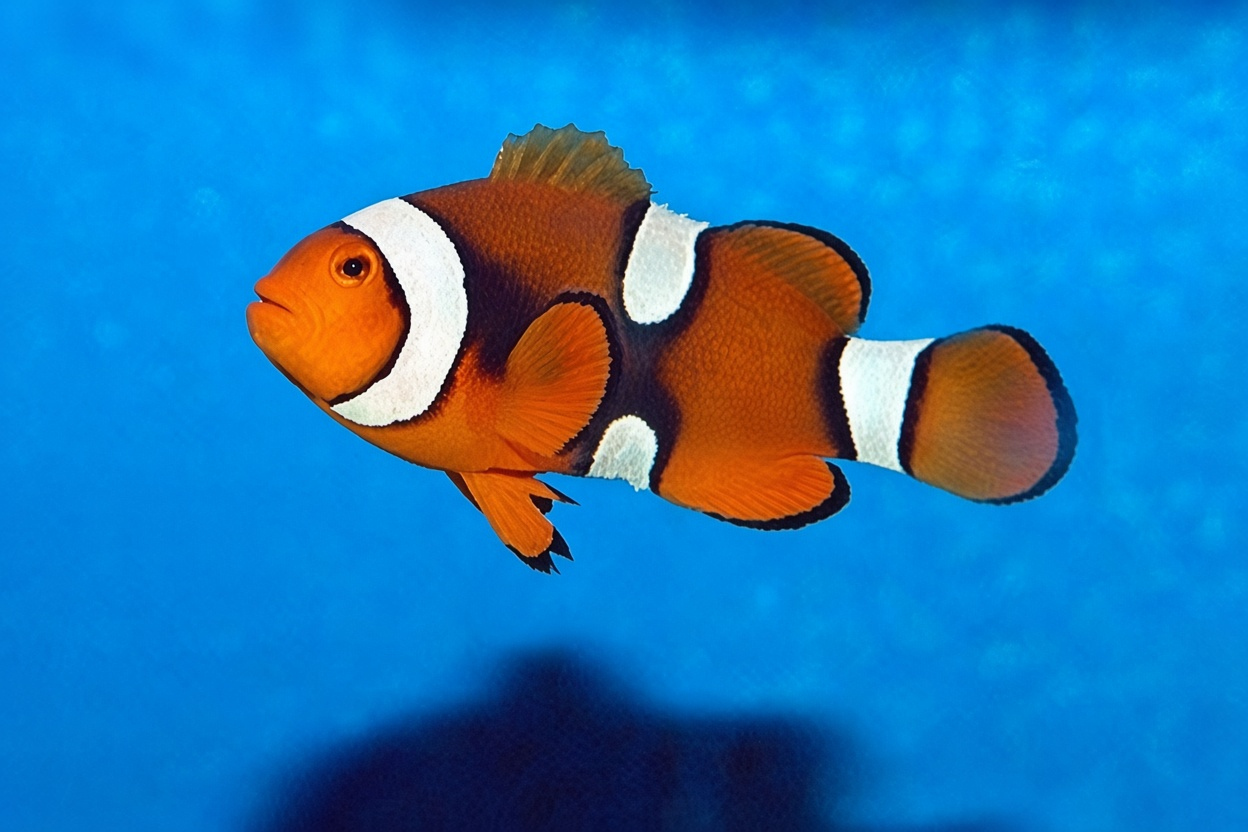
Marine captive breeding has moved far beyond a few easy species. Commercial hatcheries and specialist breeders now produce clownfish, dottybacks, gobies, some cardinalfish, seahorses, mandarins, certain angelfish and other species that were once supplied almost entirely through wild collection.
The difficulty still varies dramatically by species. Fish that lay accessible eggs and produce comparatively large larvae are generally easier to culture than species with tiny pelagic larvae requiring several stages of live food.
| Example | Captive-breeding status | Why it matters to hobbyists |
|---|---|---|
| Clownfish | Widely established | Many captive-bred varieties are readily available and accept prepared foods well |
| Banggai cardinalfish | Well established in captivity | Captive breeding provides an alternative for a species threatened in the wild by harvest and habitat loss |
| Mandarin dragonet | Available from specialist breeders | Some captive-bred fish are conditioned to prepared foods, which can simplify feeding compared with many wild specimens |
| Marine angelfish and tangs | Increasing but species-dependent | Successful culture demonstrates progress, but availability and cost can still be limited |
The “Nemo Effect” Is More Complicated Than the Popular Story
It is often claimed that Finding Nemo caused a sudden surge in wild clownfish purchases. The story is memorable, but a 2017 scientific analysis found little evidence of an immediate fan-driven increase in wild-caught clownfish imports or exports after the film's release.
That does not make media influence irrelevant. It simply shows why conservation claims should be checked against real trade data instead of repeated because they make a good story.
Banggai Cardinalfish: Captive Breeding Helps, but the Wild Population Still Matters
The Banggai cardinalfish (Pterapogon kauderni) is native to a very small region of Indonesia and has been heavily targeted for the ornamental trade. NOAA Fisheries lists commercial harvest and habitat destruction among its principal threats and lists the species as threatened under the U.S. Endangered Species Act.
The species is unusually suitable for captive propagation because males mouthbrood the eggs and release fully formed juveniles rather than tiny pelagic larvae. Captive breeding therefore provides a practical alternative to wild harvest.
But it would be misleading to say captive breeding single-handedly “saved” the species. Wild populations still require habitat protection, fishery management and monitoring, and wild-caught Banggai cardinalfish have continued to appear in trade.
Wild-Caught and Captive-Bred Fish Can Both Face Welfare Problems
Wild-caught fish may experience capture, repeated handling, holding at exporters, international transport and several changes of water conditions before reaching a retailer. For sensitive species, that chain can create substantial stress.
Captive-bred fish may have a shorter or more predictable supply chain and are often familiar with prepared foods. However, origin alone does not tell you whether an individual fish is healthy. Overstocking, poor water quality, rough transport and weak disease-control practices can occur in captive breeding systems too.
Behaviour is also not a reliable way to determine origin. A shy fish is not necessarily wild-caught, and a fish that approaches the glass is not necessarily captive-bred. Ask for sourcing information instead of trying to diagnose provenance from personality.
Traceability Is More Useful Than Guessing
Better sourcing depends on knowing where animals came from. Accurate labels, supplier records, fishery information and chain-of-custody systems make it easier for retailers and hobbyists to distinguish responsible collection from anonymous or illegal supply.
Project Piaba is developing a verification and traceability program for Rio Negro ornamental fish that aims to connect individual fishers and collection locations with fish moving through the trade. This is the kind of transparency that can make a sustainability claim verifiable rather than merely promotional.
Coral Propagation Can Reduce the Need for New Wild Collection
Many reef-building corals can be propagated asexually by taking a fragment from an established colony and growing it into a new colony. Commercial coral farms and hobbyists use this approach extensively, and artificial propagation can reduce the need for repeated collection of wild coral.
Captive propagation does not have zero environmental impact. Indoor systems consume electricity, salt, water and equipment, while ocean-based mariculture still interacts with coastal environments. The important advantage is that one parent colony can produce many generations of fragments without removing a new full colony from a reef each time.
When buying coral, ask whether it is aquacultured, maricultured or recently wild-collected. A locally propagated fragment with a known history is often an excellent choice, but responsible ocean mariculture can also provide livelihoods while reducing pressure on unmanaged collection.
Live Rock, Dry Rock and Habitat Impact
Manufactured dry rock can reduce demand for rock removed from natural reef environments and can lower the chance of introducing unwanted hitchhikers. It is not biologically identical to mature live rock on day one, however.
Dry rock must be colonized by microorganisms and allowed to mature before it develops the biological complexity of established live rock. Bottled bacterial cultures can help begin this process, but they do not instantly reproduce a mature reef ecosystem.
Live rock can also contain beneficial biodiversity as well as unwanted organisms. Bristleworms, for example, are not automatically dangerous pests; many common species are useful scavengers. The real issue is knowing what you are introducing and managing genuine pests appropriately.
How to Buy Aquarium Livestock More Responsibly
A responsible purchase begins with information rather than assumptions. A good retailer should be willing to discuss origin, current diet and how long an animal has been in its care.
- Research the species' adult size and husbandry requirements
- Check whether captive-bred specimens are available
- For wild-caught species, look for evidence of legal and sustainable collection
- Avoid species with poor survival records unless you can meet their specialist needs
- Is this individual captive-bred or wild-caught?
- Where did it come from?
- What food is it eating now?
- How long has it been in the store?
- What quarantine or health-screening process was used?
- The source is unknown and the seller makes unverifiable ethical claims
- The fish is visibly distressed, injured or not feeding
- A vulnerable species is being sold without clear provenance
- The seller cannot explain basic care requirements
Building a More Sustainable Aquarium
The most sustainable aquarium is not necessarily one containing only captive-bred animals. It is one built around informed choices, appropriate husbandry and sources that can demonstrate responsible practices.
- Choose healthy, traceable livestock from reputable suppliers
- Prefer captive-bred stock when it clearly reduces conservation or welfare risks
- Support well-managed wild fisheries that protect habitats and local livelihoods
- Avoid destructive, illegal or anonymous collection chains
- Choose aquacultured or responsibly maricultured corals where possible
- Quarantine new livestock and provide species-appropriate care
- Do not buy animals whose long-term needs your aquarium cannot meet
- Ask questions and reward retailers that can answer them clearly
FAQ
Is captive-bred always more ethical than wild-caught?
No. Captive breeding is often an excellent option and can reduce pressure on vulnerable wild populations, but a well-managed wild fishery can also be sustainable and may support local communities and habitat conservation. The quality of the source matters more than the label alone.
Are most freshwater aquarium fish captive-bred?
Yes, most commonly traded freshwater ornamental fish come from breeding facilities. A 2019 review estimated the captive-bred share at roughly 90%, although exact percentages vary by species, region and data source.
Are most marine aquarium fish still wild-caught?
Wild collection still supplies a large majority of marine ornamental fish, although captive breeding is expanding. Reliable global tracking remains incomplete, so exact percentages should be treated as estimates rather than a live market counter.
How can I tell whether a fish was responsibly sourced?
Ask the retailer for the origin, breeder or fishery where known, current diet and supplier information. Traceability and specific answers are much more useful than trying to infer origin from price or behaviour.
Should I avoid all wild-caught aquarium fish?
Not necessarily. Avoid fish from destructive, illegal, untraceable or unsustainable collection. Responsible wild fisheries can be compatible with conservation when harvest is well managed and the economic value of the fish helps local communities protect habitat.
References and Further Reading
- Journal of Fish Biology / PubMed: Wild caught ornamental fish: sustainability of aquatic organisms and livelihoods
- Journal of Fish Biology / PubMed: Sources and sustainability in the ornamental freshwater fish trade
- Project Piaba: Sustainable Rio Negro aquarium fisheries and community conservation
- Project Piaba: Rio Negro verification and traceability program
- Fish and Fisheries: The “Nemo Effect”: perception and reality
- NOAA Fisheries: Banggai cardinalfish conservation and threats
- Scientific Reports / PubMed: Evidence of cyanide exposure in the marine aquarium trade
- NOAA Fisheries: Indo-Pacific reef-building corals: collection, trade and artificial propagation